

When writing was invented followed shortly by the invention of the book, reading was a communal activity that usually took place at a sacred site or a public square where people gathered to hear a holy man or tribal elder read aloud the written word about the afterlife or the law. Up until the 15th century, reading was reserved for a privileged few who could decipher the peculiar symbols written on parchment or paper. However, with the increase in literacy and books becoming more accessible to people beginning in the early 16th century, reading became a more private affair.
Reading for leisure is an activity that lets us escape the noise and demands of modern life, and reading well is one of the great pleasures that solitude affords us. It’s one of the few leisurely activities today that can truly be done alone; in fact, it must be done alone. One can read with a friend, a lover, or with members of a book club, but it can never be as enjoyable and deep as when one reads in solitude.
Reading returns us to “otherness,” as Harold Bloom states in his book How to Read and Why. Solitary reading is a transcendental experience that allows for self-reflection and connecting with our authentic selves that have been alienated from society or perhaps abandoned by people we know or have come across in our lives. Whether we choose to be alone or not, reading alleviates loneliness yet at the same time strengthens our resolve to be alone. Alas, human relationships—whether platonic or romantic—are fragile, impermanent, and so vulnerable to fickle emotions and misunderstandings and, in Bloom’s words, “likely to diminish or disappear, overcome by time and space.”
Having friends or a partner or being around people in general isn’t a bad thing; if anything, it is a lovely thing. However, there is something admirable, perhaps noble, about solitude that speaks to the reader in us. Writers, poets, and philosophers all have written about the virtues of solitude. Henry David Thoreau writes in Walden that solitude allows him to connect with nature, finding it to be enriching, productive, and relaxing. Alexander Pope has a poem titled “Ode on Solitude” in which he talks about the contentment of being alone. And for Friedrich Nietzsche, solitude is an intellectual retreat for introspection, creative thought, and finding one’s authentic self. Choosing to be alone isn’t necessarily a bad thing either nor is it something that should elicit sympathy or pity from others. Solitude is a choice while loneliness is a circumstance; and for some people, they choose to be alone.
There is no greater peace or joy than being alone with a good book, to open up its pages and be drawn into an imaginative world and be in communion with the people in the story. There is in fact a sense of a shared solitude when one reads, so in spirit one is never truly alone. If you feel overwhelmed by all that’s going on around you, societal expectations, or just feeling lonely, pick up a book and read to your heart’s content. Solitary reading is one of the most healing of activities, for it allows us to breathe, recharge, reconnect, and think deeply.
Here are five books about the happiness of being alone.
 The Elegance of the Hedgehog by Muriel Barbery
Also available on hoopla
Barbery is a French writer and a philosophy teacher, so it’s no surprise that her novel has a bit of influences from the philosophy and writings of Sartre and Camus, both of whom had a thing or two to say about solitude. Renée Michel is a concierge at a posh Parisian apartment building who doesn’t mind being alone and in fact values her solitude. She is unassuming, reserved, and seemingly aloof. Unlike the wealthy tenants whom she sees every day, she appears plain, unrefined, and maybe a bit unread. But in truth, it’s all a façade; she’s very intelligent and cultured and loves to read literary works, especially those by Tolstoy. She keeps this fact about herself from others until she befriends a precocious girl who moves into the apartment complex. This new resident slowly opens her eyes to life and eventually her heart through philosophical discussions and a genuine interest in the concierge’s life.
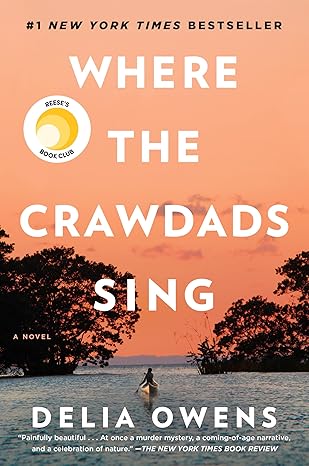 Where the Crawdads Sing by Delia Owens
Also available on Cloud Library
Solitude is a central theme in this coming-of-age story about a young girl named Kya Clark, who was abandoned by her family at an early age. She is forced to raise herself in isolation, which is both a harsh reality and a sanctuary for her. While she at times feels intense loneliness, Kya thrives in her wild independence and learns to rely on herself and her knowledge of the marshlands to survive. Her quiet solitude is suddenly taken away and her life is put on the spotlight when she is accused of killing a local man who tried to assault her. This is a story about survival, resilience, and self-reliance, sharing many themes with Thoreau’s Walden. While it reflects on the serenity of solitude, it also touches on the immense weight of being alone and the human need for family, love, and friendship.
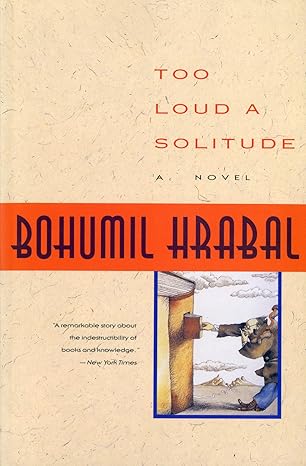 Too Loud a Solitude by Bohumil Hrabal
Also available on hoopla
This short novel was written during a time of government-sponsored censorship in communist Czechoslovakia. Haňťa is a trash compacter whose sole job is to compact paper waste and banned books. He doesn’t like destroying these literary and cultural artifacts and takes it upon himself to rescue them. Working alone, he secretly saves the books and other works of literature and brings them home to read. This defiant act and the books themselves give him a sense of personal meaning to his existence in a repressive society. His solitary life isn’t conventionally happy but it’s peaceful and filled with the “voices” of the books he’s rescued. For Haňťa, solitude offers him safety yet it’s also a silent act of defiance against a government that forces conformity.
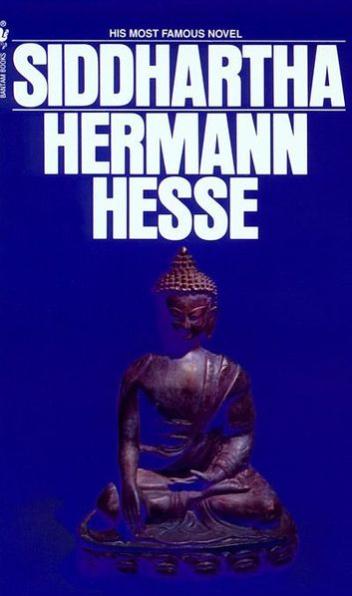 Siddhartha by Hermann Hesse
Also available in our e-book collection
This novel is a quintessential read about solitude and its path to self-discovery, personal fulfillment, and ultimately to enlightenment. In the story, a Brahmin named Siddhartha leaves his life of luxury and material comforts to seek spiritual wisdom. It’s a solitary quest but he meets a variety of people along the way who give him deep insight into human relationships such as love, friendship, and family. However, he learns through meditation and self-reflection that the path to meaning and true knowledge is guided from within.

Also available on hoopla
One of America’s most celebrated poets, Emily Dickinson lived a private and reclusive life and would have probably disliked such attention given to her. She withdrew from society to focus on her writing and poetry, much of which frequently touched on the theme of solitude and loneliness. For her, solitude meant inner freedom, creative inspiration, and privacy. Although her isolation was self-imposed, she still maintained a connection with family and friends through letters and the poems she wrote. Here is a poem about solitude that contrasts the loneliness and desolation of the sea or death with the “profounder site” of the soul that is self-sufficient and comfortable alone in its own private space.
Poem #1695
There is a solitude of space
A solitude of sea
A solitude of death, but these
Society shall be
Compared with that profounder site
That polar privacy
A soul admitted to itself–
Finite Infinity.