
The start of a new year for some people might mean a new look or a fresh start, for others, it’s new goals or big changes. Making New Year’s resolutions is a longstanding tradition for many people around the world, and no matter how modest or ambitious the resolution is, making one is sort of a big deal! And why shouldn’t it be? Being a big deal is what motivates us to get on it and just do it. We all want to start the new year BIG and with a BANG—speaking of which, you know what’s really big? Space.
Space is big, I mean mindboggling big. Consider the distance of the sun and the planets relative to one another. Earth is 93 million miles from the Sun. But that’s just a stone’s throw away compared to the distance of Pluto, one of the closest trans-Neptunian objects to Earth and at one time the farthest planet from us (Neptune now holds that title when Pluto was demoted to a dwarf planet in 2006). It’s approximately 2.7 billion miles from Earth at its perihelion. It took NASA’s New Horizons spacecraft travelling between 36,000 mph and 52,000 mph about 9.5 years to reach Pluto.
But that distance is nothing! The space between the planets in our solar system doesn’t even come close to illustrating how immeasurably vast space is. Our Milky Way galaxy contains billions of stars, and the closest star to us is Proxima Centauri, which is 4.25 light-years away. A light-year is the distance that light travels in one Earth year. How far is that? Light covers the distance of 186,000 miles in one second—ONE SECOND—that all adds up to about 5.88 trillion miles in one year. Multiply that by 4.25 and the distance between us and Proxima Centauri is roughly 25 trillion miles. What does that even mean? Our knowledge lacks the framework to help us comprehend this distance because such a large number doesn’t have any meaning in the context of human experience.
Astronomers believe the star might have a habitable planet called Proxima Centauri b. If we were in a spaceship traveling at the average speed of the New Horizons spacecraft, it would take around 78,000 years to get there and check out this new real estate. Even if we traveled at 10% the speed of light (never mind that our technology is not even close to travelling at 1% of light speed), it will take around 40 years to reach it. The distance between stars in our galaxy is incomprehensibly vast.
But wait, it gets even more insane when you look at the distance between galaxies. The Andromeda galaxy is our closest galactic neighbor at 2.5 million light-years away. That means if there is an advanced civilization living somewhere in that galaxy and they’re just as curious as we are and send signals towards us to see if any other intelligent life forms will reply, it will take 2.5 million years for their signals travelling at the speed of light to reach us. Two and a half million years ago Homo habilis, an early human, was learning to make stone tools. Now if we somehow picked up a signal from somewhere in Andromeda today and radioed back, it would take another 2.5 million years for our signal to reach it. Five million years would have elapsed since the first signal and by that time the original civilization that sent the message would probably be long gone.
Space is indeed very big. It’s the new and final frontier for humanity and for human curiosity. Despite the enormous cosmic void that separates us and all the stars, exoplanets, and galaxies, we are still driven to explore the far reaches of the universe, whether with unmanned space probes or perhaps one day with manned spaceships that will take us beyond our solar system. As we each start 2026 in our own little way, may our dreams be as big and vast as space. And if astronomy, cosmology, and astrophysics fascinate you, why not start the New Year with some mind-blowing books about space and out-of-this-world science fiction. Here are four books about space facts and three sci-fi books that will take you on a space odyssey in 2026.
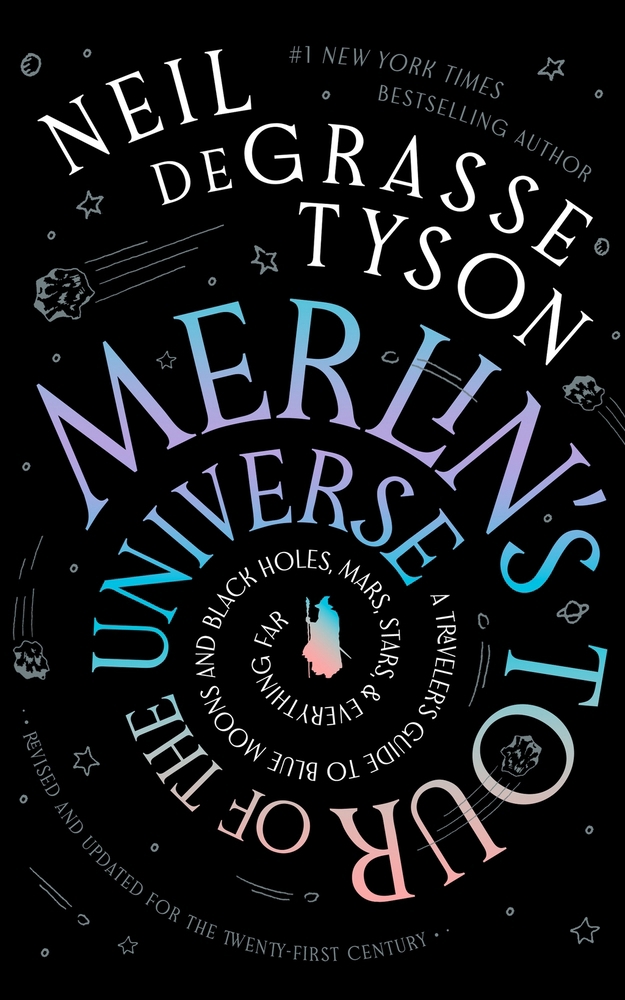 Merlin’s Tour of the Universe: A Traveler’s Guide to Blue Moons and Black Holes, Mars, Stars & Everything Far by Neil deGrasse Tyson
Neil deGrasse Tyson is a well-known astrophysicist and a celebrity in his own right who makes science fun and easy to understand. This is one of his first books published in 1989, but it was revised and updated in 2024 to include new scientific discoveries and concepts. It’s full of fun and fascinating facts about the universe in a question-and-answer format. The fictional character Merlin gives readers a tour of the different celestial objects in the sky and explains complex concepts in a way that’s easy to understand. It’s a fun and entertaining read for anyone who loves to learn about astronomy and astrophysics or for the naturally curious.
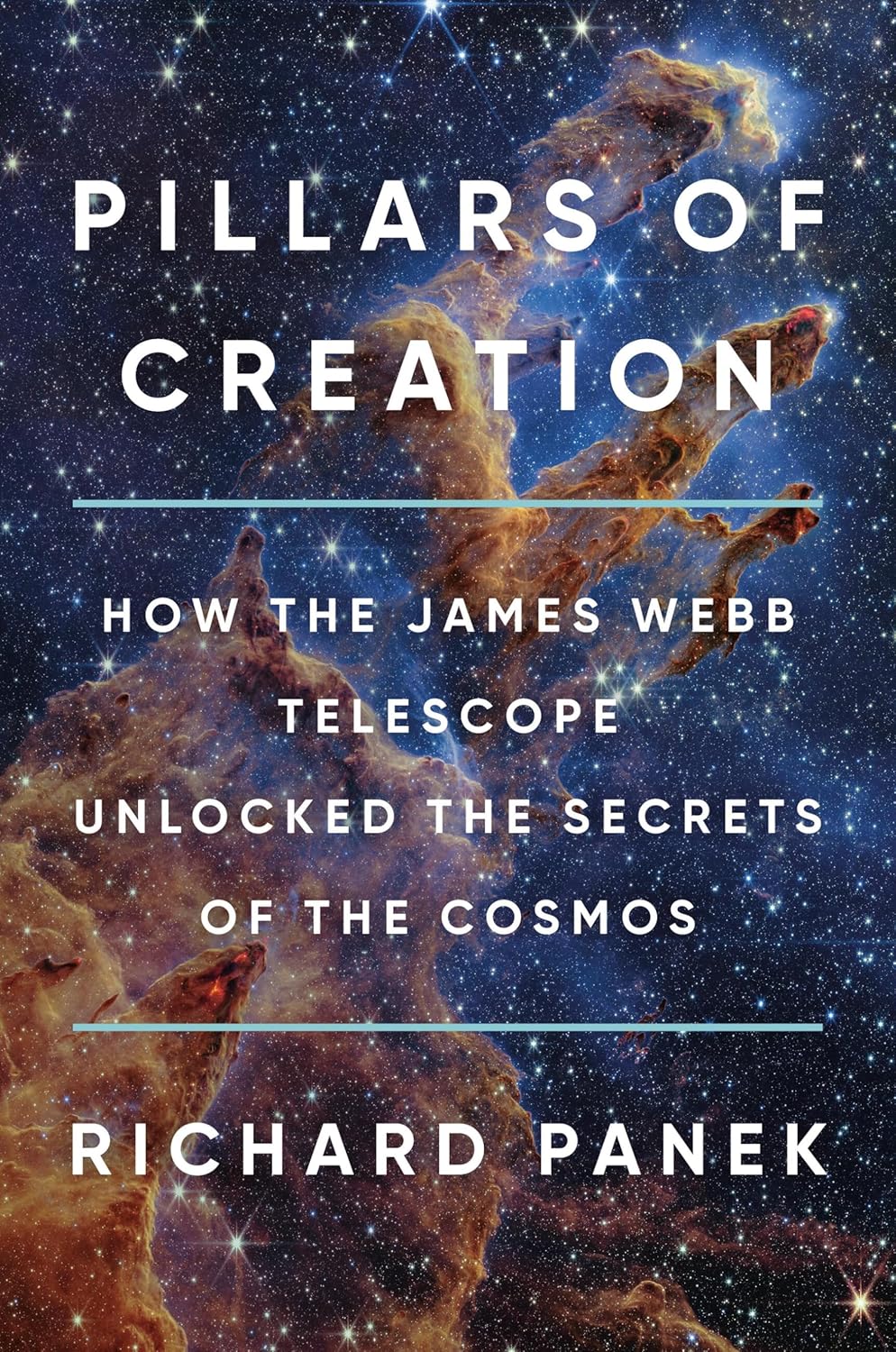 Pillars of Creation: How the James Webb Telescope Unlocked the Secrets of the Cosmos by Richard Panek
Launched in December 2021, the James Webb Space Telescope started beaming back images of deep space in 2022. Unlike the Hubble Space Telescope, the JWST has a bigger mirror and uses infrared to detect objects that Hubble can’t see. Both telescopes have a spectrograph that can split light into its constituent wavelengths and analyze them. Ever hear news about a discovery of a new exoplanet orbiting a star trillions of miles away and that it might be habitable? And you’re wondering how do they even know that it might support life! Is it just a WAG (wild ass guess)? Actually, no! The JWST and Hubble can analyze the light passing through or reflected off a planet’s atmosphere and determine its composition and specific gases that provide clues about the planet’s habitability. Spectroscopy is one of many functions that the JWST can do, and this book covers so many fascinating things about it and its many discoveries.
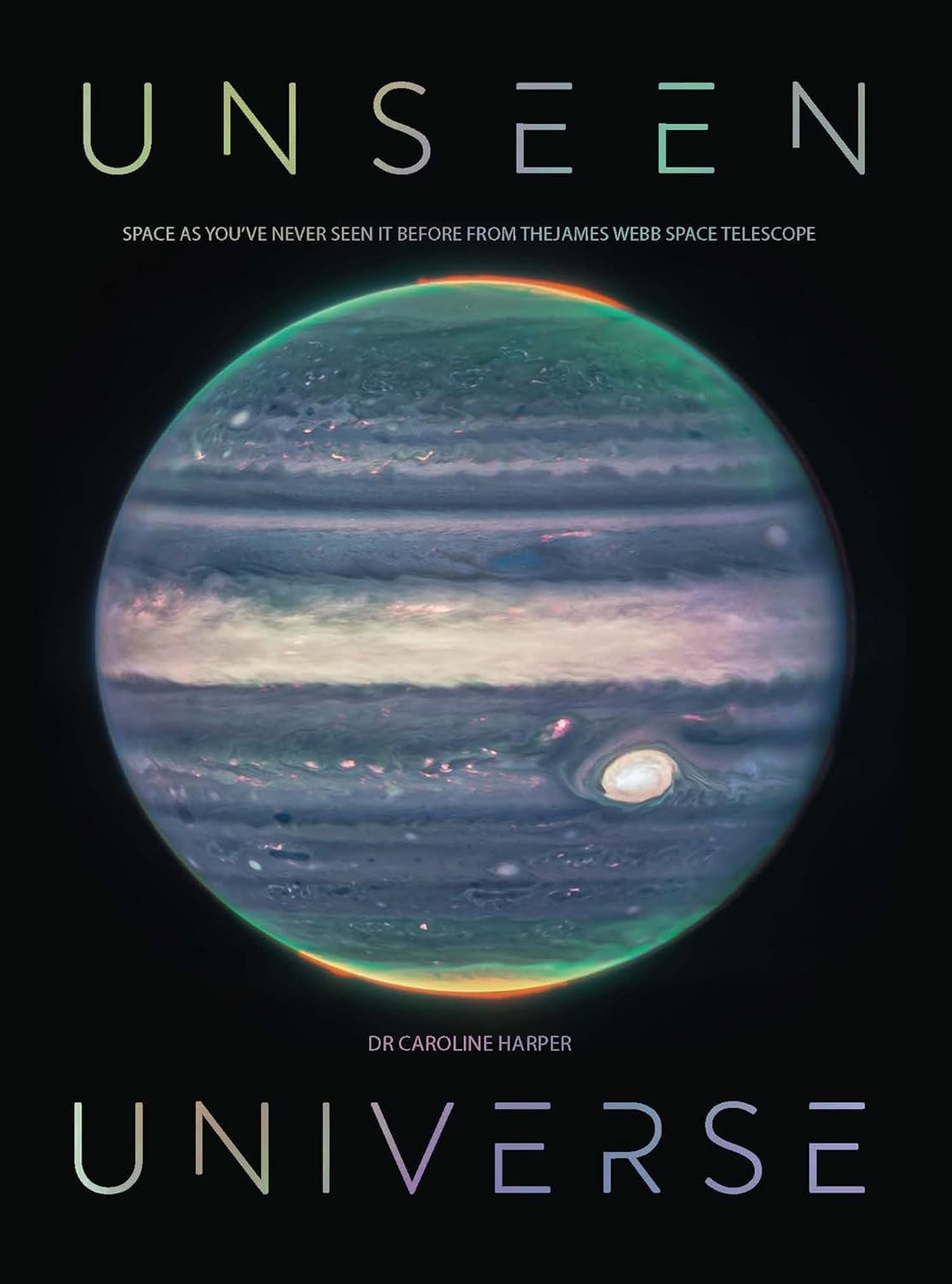 Unseen Universe: New Secrets of the Cosmos Revealed by the James Webb Space Telescope by Caroline Harper
Here’s another book about the James Webb Space Telescope, which has looked farther into space than any other telescope including the Hubble Space Telescope since 2022. Its infrared instruments can see through cosmic dust and capture distant objects whose light has been redshifted into the infrared range. This book contains stunning images of the cosmos it’s taken, from planets in our solar system to stars and nebulas in our galaxy to faraway galaxies billions of light-years away. The images include explanations about the phenomena that the JWST captured. It’s a deep read if you love astronomy but absolutely rewarding in blowing your mind away with breathtaking space photos and nerdy space facts.
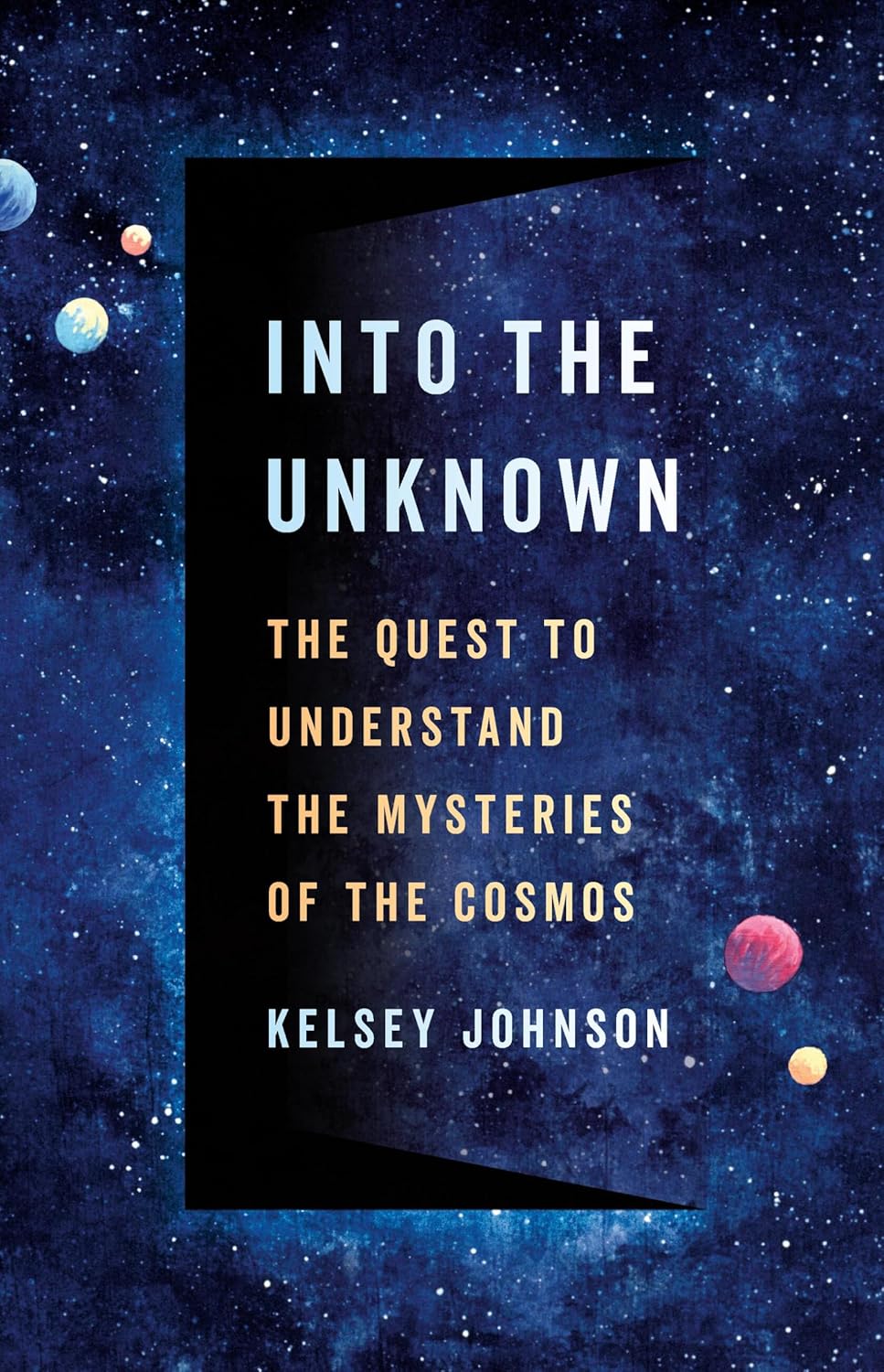 Into the Unknown: The Quest to Understand the Mysteries of the Cosmos by Kelsey Johnson
The universe is full of mysteries that astrophysicists like Kelsey Johnson try to unravel. From well-established theories like the Big Bang Theory to lesser-known hypotheses like the Zero-Energy Universe Hypothesis, these topics and many others about the cosmos are covered in this book with the layperson in mind. Science is fascinating, but it can be daunting to read about because many of the concepts are hard for our mind to grasp. Take for example neutron stars, which are incredibly dense. A teaspoon of it would weigh billions of tons! How is that possible? It’s all about science and science can be crazy. Dr. Johnson is also a teacher, so her explanation of complex concepts is easy to understand but not too simplified. Despite what we already know about the universe, there’s still a lot more that we don’t know, and this book reminds us to always ask questions and explore new ideas and theories so that we continue to learn.
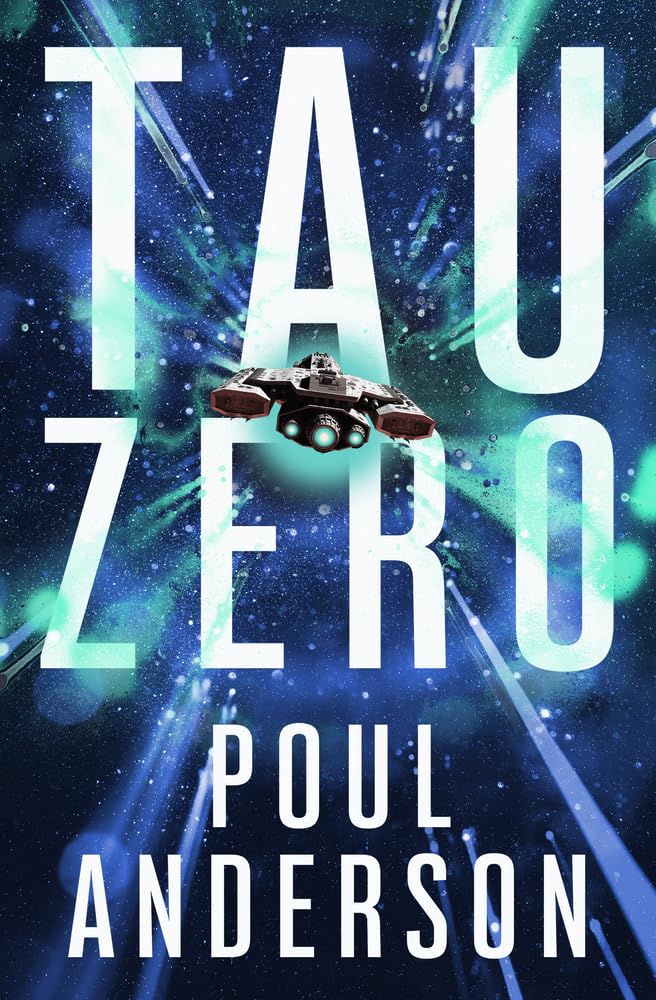
Tau Zero by Poul Anderson
Some of the best science fiction stories came out of the 1950s through the 1970s when space exploration was still very new and space travel was a novel idea. First published in 1970, Tau Zero is about a crew of fifty men and women on the spaceship Leonora Christine heading to a planet thirty light-years away. During the course of the voyage, the ship is damaged and loses the ability to decelerate. The crew has no option but to continue at an ever-increasing speed until it reaches the speed of light or tau zero, the title of the book. They will have to shoot past their targeted planet and eventually leave the Milky Way Galaxy and into the unknown. Separated from Earth and humanity both in time and by space, the crew must work together to survive and keep their sanity. The book leans heavily on hard science about special relativity, time dilation, and the physics of space travel, so it’s a very academic read but so fascinating to learn about how time works at or near light speed.
Aurora by Kim Stanley Robinson
When it comes to space travel, there’s nothing more interesting than the idea of a generation ship that’s designed for interstellar travel lasting hundreds if not thousands of years. People will live, die, and be born in the ship; the original passengers and a few succeeding generations will never live to see the ship reach its destination, but their descendants will. What will it be like on such a ship where space and resources are limited? How will a low-gravity environment affect the physiology of each new generation? Will they come to resent their ancestors for condemning them to a life aboard a ship hurtling through the cosmic void? Aurora tackles some of these questions, but it paints a grim dystopian view of human interstellar travel. The plot of the story takes root when the “generation ark” with 2,000 passengers finally reaches its destination in the Tau Ceti system after 160 years in the interstellar medium. However, as they begin to colonize its moon they named Aurora, they come across a problem that disrupts their plans and pits the ship’s inhabitants against one another. There’s a lot of hard science in the story, but it’s also very philosophical. The question that lingers after reading the book is whether space travel is feasible and if it’s worth it.
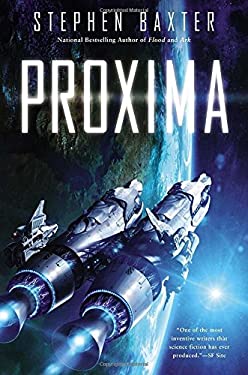 Proxima by Stephen Baxter
Sci-fi books about space travel are in many ways adventure stories, and Proxima is very much a space adventure that has elements of the wild west. It follows a convict named Yuri Eden who is sent to a planet orbiting Proxima Centauri, a red dwarf star that is closest to our Sun. He is among a group of a thousand other people sent to Proxima c to establish a settlement. It’s tidally locked so one side is eternally facing the star and the other side is in perpetual darkness. Yuri and a few of his fellow convicts find themselves stranded and must learn to survive in an alien and inhospitable environment.